domingo, 11 de mayo de 2014

Free fall and his effects on water splash


Objective:
To prove the difference of loss of water when throwing a ball in free fall from diferent heights and measuring how much water went out of the beaker.
Background information:
Free fall is what we call when an object is falling because of the force of gravity (9, 8 m/s2 each second). When an object is in state of free fall, this one will accelerate according to gravity acceleration number wich has been said before. If we want to calculate the final velocity or any other reult affected by gravity, we use to use these equations called the kinematic equations:
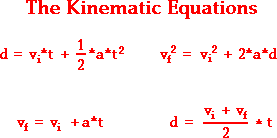


i = Inicial velocity           vf = final velocity
t = Time (in seconds)      a = acceleration (9, 8 m/s2)

d = distance
Images and information took from 

Physicsclassroom.com

Kinematic Equations

In-text: (Physicsclassroom.com, 2014)
Bibliography: Physicsclassroom.com, (2014). Kinematic Equations. [online] Available at: http://www.physicsclassroom.com/class/1DKin/Lesson-6/Kinematic-Equations [Accessed 26 May. 2014].

Hypothesis:
The hypothesis is that when higher is the ball, more water will come out of the beaker because of the force of the impact.

Variables:
Independent: Height from where we throw the ball
Dependent: Loss of water in the beaker
Controlled: Mass of the plasticine ball
Materials:
- Waterproof scale
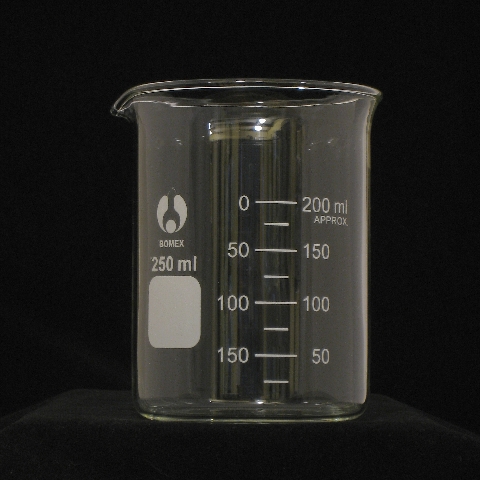
- Beaker of 10/15 cm of diameter


 - Plasticine ball

- Ruler
- Water
Procedure:
1. Fill the beaker with water.
2. Measure the weight of the water in the beaker
3. Throw the plasticine ball from 30 cm and meaure the lss of water (and so weight) done by the splash.
4. Repeat this process 2 times.
5. Do the same than in point 3. and 4. but at 50 cm
6. Then with 70 cm, 90 cm and 110 cm.
7. Put the results in a table and make the average between the three throw at the same height.


Attempt 1 (mL)
Attempt 2 (mL)
Attempt 3 (mL)
Average
30 cm
4.2
4.6
4.2
4.3
50 cm
8.2
9.8
7.8
8.7
70 cm
14.8
13.2
15.0
14.3
90 cm
21.8
21.2
23.8
22.3
110 cm
19.8
22.4
20.6
21.4


Conclusion:

1.      We can observe that the more potencial energy we have the higher the water lost is. This is due to the fact that this potential energy it´s transformed into kinetic energy which is passes to the water which makes it move and some of it  goes out.
2.      Another thing we can see is that it is directly proportional. From our data  we can guess it forms a curve but we know that it´s not going to go to infinity since there´s a finite amount of water. Therefore it must be a hyperbola which tends to 1.3340 L (Our amount of water) when x goes to infinity and to 0 when it goes to –infinity
3.      We have to take into account our equipment is not perfect and maybe that´s why for example in 110cm we had some strange results compared with the ones we got on 90cm which is strange but it may have been cause the difference between this two is small and one has gone a bit up and the other a bit down.

b    We couldn´t be exact in the height despite having a device to measure so it can change +- 5 cm

2.      We couldn´t be sure if we threw it exactly in the centre of the bowl and this can have a big repercussion in the amount of water that goes out.

sábado, 22 de febrero de 2014

Precision of measurement

Materials:
Measuring Cylinder            
Pipette
Volumetric flask
NaCl (Common Salt)
Hexane


Procedure:
Test 1:
1.Get a an empty measuring cylinder.
2. Weight it, it had a total weight of 77.8 g.
3. Use the pipette and the measurement cylinder to put 10 ml of water.
4. Pour the water on the measuring cylinder.
5. Weight the total mass.
6. Subtract the mass of the measuring cylinder to the total and you will have the weight of the water. (9.43g)

Test 2:
1.       Use the same measuring cylinder (which weights 77.8g) to introduce 2,5 grams of NaCl (table salt).
2.       Weight it with the salt in it.
3.       Do the same equation in order to obtain the mass of the solution.


Conclusion:
We have seen how NaCl has dissolved in water but not in hexane, this is because NaCl and water are both polar substances so they can dissolve easily while hexane is a covalent bond and water, as we have said, is polar so it is very hard to make them dissolve.

By doing this work, we learnt how to accurate more our results and that, even if we with the higher accuracy possible, it wasn't perfect. For the next time I think that we could try to be more precise, take more notes and photos of absolutely all in order to have good images to explain the experiment.


domingo, 26 de enero de 2014

Pressure of Ethyl Acetate

Background information:

The Ethyl Acetate or C4H8O2 is a chemical that have a caracteristic sweet smell, it is used in glue, edcaffeinating tea and cofee and also used in cigarettes. This chemical has no special color, it is like water. The Ethyl Acetetate is made of Acetic acid and ethanol.
The pressure is the unit of force that we use to mesasure the force that have a gas in a particular volume, if we reduce the volume but not the cuantity of gas, the pressure and if the volume is bigger the pressure will be lower.

Procedure:

1. Select a chemical (In our case it will be the Ethyl Acetate)


2.  Set up a shlenk tube with 5ml of your chemical inside


3.


4. Attach the pressure sensor and make vacuum inside


5. Record the vapour pressure of your chemical at four different temperatures using logger pro.


6. Clean the shlenk tube and pack it away.

Conclusion:

When higher is temperature, more volatility it will have because the particles move faster due to the energy given by temperature, So, if the Ethyl Acetate particles are  more separated from each other, this will lead to a lower pressure.

viernes, 29 de noviembre de 2013

Logger Pro first experience!


Why we have made this experiment:
We have made this experiment in order to see the relation between pressure and temperature.

What have we made:
In order to gatther the data we have connected the digital thermometer and pressure indicator to the computer. We put the water to boil and we connect the bouth sensors. We open the logger and data will be gathered automatically.

Data gathered: (The data between this numbers shown has been taken in acount for the graph, but it´s extention would be to  big for the table).


Time(s)
Pressure(KPa)
Temp Cº
0
102,82
32,26
10
102,89
32,69
20
102,88
33,19
30
102,92
33,53
40
102,94
34,46
50
102,94
35,03
60
102,93
35,48
70
102,93
36,32
80
102,95
36,93
90
102,93
37,50
100
102,93
37,74
110
102,99
38,09
120
102,97
38,90
130
103,01
39,40
140
103,00
40,30
150
103,01
40,57
160
103,14
41,22
170
103,14
41,94
180
103,14
42,28
200
103,14
43,76
210
103,16
44,12
220
103,17
44,69
230
103,19
45,26
240
103,20
45,83
250
103,22
46,40
260
103,23
46,97
270
103,25
47,54
280
103,26
48,11
290
103,28
48,68
300
103,29
49,25
310
103,31
49,82
320
103,32
50,39
330
103,34
50,96
338
103,35
51,41

What we have seen on our computers:


Graphs:


To sum up all the graphs:


Conclusion:
We can conclude, seeing the graph, that the pressure doesn´t change with temperature. However, a lot of informatic problems can ocurr, incluiding a problem with the pressure sensor.


Lab experiment for calculating Magnesium mass

Mass of Magnesium

To determine the value of the constant of the gases, R, by measuring the hydrogen
produced in the reaction of certain amount of magnesium with hydrochloric acid,
according to the reaction
Mg + 2 HCl → MgCl2 + H2,
at the given conditions of pressure and temperature.

Theoretical background
The ideal gases model establishes that the relationship between p, V, T and
amount of gas is:
P · V = n · R · T
 Pressure of the gas * Volume of the gas = number of substance * temperature* gas constant
R is a constant whose value is 0.082 atm·L/K·mol.

Materials
Support Copper wire
Clamps Magnesium
Graduated tube (20 mL) Thermometer
Hollow stopper Commercial HCl (approx. 12M)
250 mL beaker
Method/Procedure
1. Take one piece of magnesium. Record its exact weight.
2. Once clean and dry, firmly tie the magnesium tape to the copper wire. Tie the other end of the copper wire to a hollowed stopper.
3. Pour about 2 mL of HCl conc. (≈12M) into the graduated tube.
4. Slowly, and carefully, pour water into the tube, trying to avoid mixing both liquids. This will be easier if you tilt the tube so it is not vertical. As the tube fills with water you can slowly turn the tube vertical and fill it with water up to the top.
5. Place the magnesium tape tied to the stopper onto the top of the tube, closing the hole in the stopper with your finger, in order to avoid any air getting in.
6. Quickly turn the tube upside down and place it in a beaker of water. Once in the water take your finger out. You will see how the HCl moves down the tube because it has a higher density than water. It reacts with the magnesium, producing hydrogen gas (that will be collected at the top of the tube).
7. Hold the tube vertically with the clamp and let it stabilise for a few minutes to make sure that the temperature of the beaker equals the room temperature.
8. Adjust the tube vertically until the level of the liquid inside and outside the tube coincides so the inside pressure equals the atmospheric pressure. The inside pressure is the sum of two factors - the pressure corresponding to the hydrogen and the pressure corresponding to the vapour pressure of water at that temperature:
 Pin the tube = Patm = P(H2) + PV water so then P(H2) = Patm – PV water
9. Use the above equations to calculate the pressure and record the volume of hydrogen produced and the temperature.
10. Calculate the value of R using the equation of the introduction, taking into account that the number of moles of hydrogen will be the same than the ones of magnesium.
11. Repeat the whole procedure with a second piece of magnesium and give the result as an average of the two calculations. Compare your result with the real one.

Table 1. Water vapour pressures (1 Torr = 1 mmHg, 760 mmHg = 1 atm)

15º C   12.8 Torr    19º C   16.5 Torr   23º C   21.0 Torr   27º C   26.7 Torr
16º C   13.6 Torr    20º C   17.5 Torr   24º C   22.4 Torr   28º C   28.3 Torr
17º C   14.5 Torr    21º C   18.6 Torr   25º C   23.7 Torr   29º C   30.0 Torr
18º C   15.5 Torr    22º C   19.8 Torr   26º C   25.2 Torr   30º C   31.8 Torr
Pressure of the gas * Volume of the gas = number of substance * temperature* gas constant

Results:
768mm and 764mm. The media is 766 mm  Hg= 1.00789474 atm
V: 10,5
P:
N:1
T:20
Gas constant is 0.082 atm·L/K·mol.

Therefore: ¿What is the gas pressure?
Well, then we have to calculate it:
P*10,5 = 1*293,15*0,082
10,5 * G = 24,038
P = 2,3
The pressure of H2 is 2,3.
Moles of hydrogen will then be: 1

miércoles, 9 de octubre de 2013

Lab: Getting info about materials! (Experimental session on substances)

In this Lab sesion we are aiming to know more about some materials: Iron and Calcium Chloride.
We are going to see different things about these materials: Reactivity (with Hidrochloric acid as inorganic compound and acetone as an organic one), Boiling point, melting point, combustion, solubility and the smell it remembers to.
Compound
Reactivity
Boiling
Melting
Burning
Solubility
Smell
Calcium Chloride
CaCl2
HCl (inorganic)
Yes
Acetone (organic)
Yes
High
Hight
No
Yes, quite quick
Sort of Swimming pool or W.C
Iron
Fe
HCl
(inorganic)
Yes
Yes
Yes
Yes
No
Dusty

Video about the Lab session